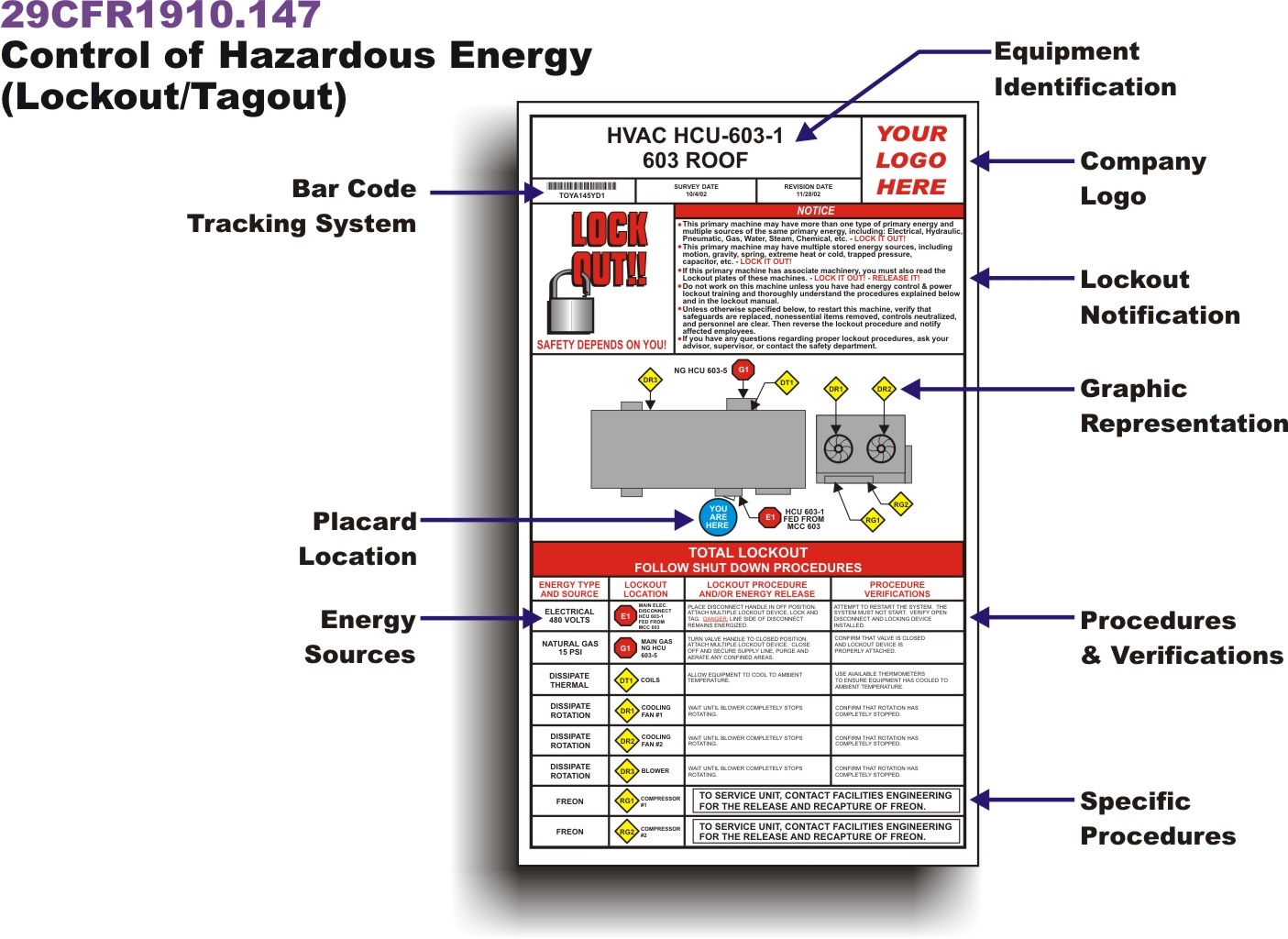
Every day across U.S. manufacturing, maintenance, and industrial facilities, workers interact with machinery that poses serious energy hazards. A single misstep—bypassing a safety procedure, failing to verify isolation—can lead to catastrophic injury. The OSHA lockout tagout (LOTO) log sheet is not just paperwork. It's a legal record of control, a moment-by-moment account of when machines were made safe, by whom, and for what purpose. Ignoring it doesn’t just risk noncompliance—it risks lives.
This guide cuts through the confusion. We’ll break down exactly what belongs on an OSHA-compliant LOTO log sheet, why every entry matters, and how to structure logs that stand up to audits while serving frontline teams.
What Is an OSHA Lockout Tagout Log Sheet?
The OSHA lockout tagout log sheet is a formal, written record used to document each instance when energy-isolating devices—like circuit breakers, valves, or disconnect switches—are locked and tagged before maintenance or servicing.
While OSHA 29 CFR 1910.147 doesn’t explicitly mandate a "log sheet" by that name, it requires periodic inspections of LOTO procedures (at least annually) and documentation of each employee’s participation in servicing or maintaining machines. The log sheet consolidates this data into a single, auditable trail.
Think of it as the maintenance equivalent of a flight log: not just who did what, but when, how, and under what conditions. It ensures accountability, tracks compliance, and provides evidence during OSHA inspections.
Why the Log Sheet Isn’t Optional—And What Happens If You Skip It
Manufacturers often treat the LOTO log as optional admin work—something filled out “when time allows.” That mindset is a liability.
In 2023, OSHA cited over 3,000 violations related to control of hazardous energy, with penalties averaging $14,502 per violation. In one case, a Midwest food processor was fined over $160,000 after an employee lost three fingers during unclogging operations—no documented LOTO, no log sheet, no verification trail.
The log sheet matters because:
- It satisfies OSHA’s periodic inspection requirement (1910.147(c)(6)(i))—each inspection must be certified, including the machine involved, the date, the employees, and the inspector.
- It prevents unauthorized re-energization by recording who applied locks and when.
- It creates training feedback loops—gaps in documentation often reveal flaws in procedure or understanding.
- It supports incident investigations by providing a timeline of control measures.
Without a log, you’re not just risking fines—you’re operating blind.
Key Elements of an Effective LOTO Log Sheet
A compliant, useful log isn’t cluttered with fluff. It’s structured to capture only what matters. Here’s what every log sheet should include:
#### 1. Date and Time of Lockout Record when the lockout begins and ends. Precise timestamps matter during investigations.
#### 2. Equipment or Machine ID Use a clear identifier—serial number, asset tag, or standardized name (e.g., “Conveyor Line 3 – Drive Motor”).
#### 3. Purpose of Maintenance Briefly state the work: “Replace drive belt,” “Clear jam in feeder,” “Inspect hydraulic valve.”
#### 4. Authorized Employee(s) List names and roles. OSHA requires authorized employees (trained in LOTO) to perform lockouts. Include contact info if needed.

#### 5. Energy Sources Controlled Detail each type isolated: electrical, pneumatic, hydraulic, mechanical, chemical. Example: “Main 480V disconnect, hydraulic pressure valve, conveyor tension spring.”
#### 6. Lock and Tag Details Note lock numbers, tag IDs, and locations. This enables verification and prevents accidental removal.
#### 7. Verification of Isolation Document how zero energy was confirmed—e.g., “Tested circuit with multimeter,” “Bled hydraulic line.”
#### 8. Inspection and Sign-Off Include space for a supervisor or safety officer to review and sign off post-maintenance.
A well-designed log sheet turns this into a checklist format, reducing omissions and streamlining audits.
Common Mistakes That Undermine LOTO Logs
Even organizations with strong safety cultures make log sheet errors that compromise compliance:
- Backdating entries: Filling out logs after the fact increases risk of inaccuracies and raises red flags during audits.
- Vague equipment descriptions: “Machine in back room” doesn’t pass OSHA scrutiny. Use asset IDs.
- Missing verification steps: Logging the lock but not the test is incomplete.
- One-size-fits-all logs: A log for a CNC lathe shouldn’t look the same as one for a boiler system.
- No retention policy: OSHA requires inspection records to be kept for at least one year. Many companies lose logs after 30 days.
Pro Tip: Conduct a quarterly log audit. Pull a random sample and verify entries against work orders and shift logs. Look for consistency, clarity, and timing accuracy.
Practical Use Case: How a Plant Fixed Its LOTO Log System
A medium-sized automotive parts manufacturer failed an OSHA audit due to inconsistent LOTO logs. Some shifts used paper forms; others relied on verbal confirmation. No central tracking existed.
Their fix: - Created machine-specific log templates with embedded QR codes. - Trained all authorized employees on log completion as part of LOTO refresher training. - Assigned lock numbers and standardized tag colors by department. - Implemented a digital log system synced to maintenance records.
Within six months, compliance rose from 62% to 98%, and near-miss reports during maintenance dropped by 40%.
The key wasn’t complexity—it was consistency and accountability.
Digital vs. Paper LOTO Logs: What Works Best?
The shift from paper to digital logs is accelerating. Here’s how they compare:
| Factor | Paper Logs | Digital Logs |
|---|---|---|
| Accessibility | Limited to physical location | Cloud-based, available on tablets or phones |
| Audit Readiness | Requires scanning/filing | Instant export, searchable history |
| Error Rate | Higher (illegible writing, missing fields) | Lower (required fields, dropdowns) |
| Real-Time Verification | None | Push notifications, GPS tagging |
| Integration | None | Can sync with CMMS, ERP, or safety platforms |
Many companies use hybrid models—paper for field use, digital for archiving. But for large or multi-site operations, digital wins on scalability and compliance proof.
5 Tools to Streamline LOTO Log Management For teams serious about compliance, investing in the right system pays off. Here are five proven options:
- Fracarita SafetySync
- - Cloud-based LOTO management with digital log sheets, audit trails, and compliance reporting.
- - Best for: Mid to large enterprises needing OSHA-ready documentation.

- EHS Insight
- - Integrates LOTO logs with broader EHS workflows, including incident tracking and training.
- - Best for: Companies already using integrated safety platforms.
- Lockout.io
- - Mobile-first app for creating, storing, and reviewing LOTO procedures and logs.
- - Best for: Field-heavy teams with mobile workforces.
- iAuditor by SafetyCulture
- - Customizable checklists for LOTO logs, supports photo uploads and real-time sharing.
- - Best for: Small to mid-sized operations wanting flexibility.
- MasterControl Safety
- - Enterprise-grade, integrates with quality management systems.
- - Best for: Regulated industries (pharma, aerospace) with strict documentation needs.
Choose based on your workflow—not just features. A simple checklist app may outperform an enterprise suite if your team actually uses it.
Building a Culture Where LOTO Logs Are Respected
A log sheet is only as strong as the culture behind it. If workers see it as “just paperwork,” errors and omissions will follow.
To shift the mindset: - Include log completion in safety KPIs, not just compliance checkboxes. - Recognize consistent log use—highlight teams with perfect documentation. - Use logs in training—review real (anonymized) entries to teach best practices. - Empower workers to stop work if logs are missing or incomplete.
When employees understand that the log isn’t for OSHA—it’s for them—compliance becomes instinctive.
Final Checklist: Is Your LOTO Log OSHA-Ready?
Before your next audit, verify your log sheets meet these standards:
✅ Each entry includes date, time, and equipment ID ✅ All energy sources are clearly listed and verified ✅ Authorized employees are named and trained ✅ Lock and tag numbers are recorded ✅ Verification method is documented ✅ Periodic inspections are signed and dated ✅ Logs are retained for at least one year
If any box is unchecked, fix it now—not after a citation.
The OSHA lockout tagout log sheet isn’t a formality. It’s a frontline defense against preventable harm. Treat it with the seriousness it deserves, and you’ll protect both your team and your bottom line.
Frequently Asked Questions
What should be included in an OSHA lockout tagout log sheet? A compliant log includes the date/time, equipment ID, maintenance purpose, names of authorized employees, energy sources controlled, lock/tag details, verification method, and inspector sign-off.
Is a log sheet required by OSHA for every LOTO procedure? OSHA doesn’t require a log sheet per se, but it mandates documentation of periodic inspections and employee participation—both satisfied through a formal log.
How long should LOTO log sheets be kept? OSHA requires retention of inspection records for at least one year from the date of the inspection.
Can digital LOTO logs be used for OSHA compliance? Yes, digital logs are fully compliant as long as they capture all required elements and are accessible for audits.
Who is responsible for filling out the LOTO log sheet? The authorized employee performing the lockout is responsible for completing the log, with review by a supervisor or inspector.
Should every worker involved in maintenance be listed on the log? Yes, all authorized employees applying locks must be listed to ensure clear accountability.
Can one log sheet cover multiple machines? No. Each machine or piece of equipment requires a separate log entry to ensure clarity and traceability.
FAQ
What should you look for in OSHA Lockout Tagout Log Sheet Essentials for Compliance? Focus on relevance, practical value, and how well the solution matches real user intent.
Is OSHA Lockout Tagout Log Sheet Essentials for Compliance suitable for beginners? That depends on the workflow, but a clear step-by-step approach usually makes it easier to start.
How do you compare options around OSHA Lockout Tagout Log Sheet Essentials for Compliance? Compare features, trust signals, limitations, pricing, and ease of implementation.
What mistakes should you avoid? Avoid generic choices, weak validation, and decisions based only on marketing claims.
What is the next best step? Shortlist the most relevant options, validate them quickly, and refine from real-world results.