Every year, hundreds of workers suffer severe injuries—or worse—because machines unexpectedly start during maintenance. In many cases, the root cause is simple: a missing or improperly executed lockout tagout (LOTO) procedure. This isn’t just about broken protocols; it’s about lives. A single unsecured energy source—electrical, hydraulic, pneumatic, chemical, or gravitational—can turn a routine repair into a catastrophe.
Lockout tagout is not a bureaucratic checkbox. It’s a systematic safety practice designed to isolate hazardous energy and stop equipment from accidental activation. When done right, it protects maintenance crews, reduces downtime, and keeps facilities compliant with OSHA and industry standards.
Yet despite its importance, LOTO remains one of the most frequently violated safety procedures. Why? Because shortcuts are tempting. Because training is inconsistent. Because some organizations treat LOTO as paperwork rather than a lifeline.
Let’s break down what effective lockout tagout really looks like—beyond the manuals and posters on the wall.
What Is Lockout Tagout (LOTO)?
At its core, lockout tagout is a two-part safety process:
- Lockout: Applying a physical lock to an energy-isolating device (like a circuit breaker or valve) to prevent re-energizing.
- Tagout: Attaching a warning tag that identifies the worker, the reason for shutdown, and the date/time.
Together, they ensure that equipment stays off and unpowered until maintenance is complete and the authorized employee removes both lock and tag.
This system applies to any machinery or process capable of releasing stored or unexpected energy. That includes:
- Conveyor belts
- Hydraulic presses
- Boilers and steam systems
- Electrical panels
- Pneumatic tools
- Chemical processing units
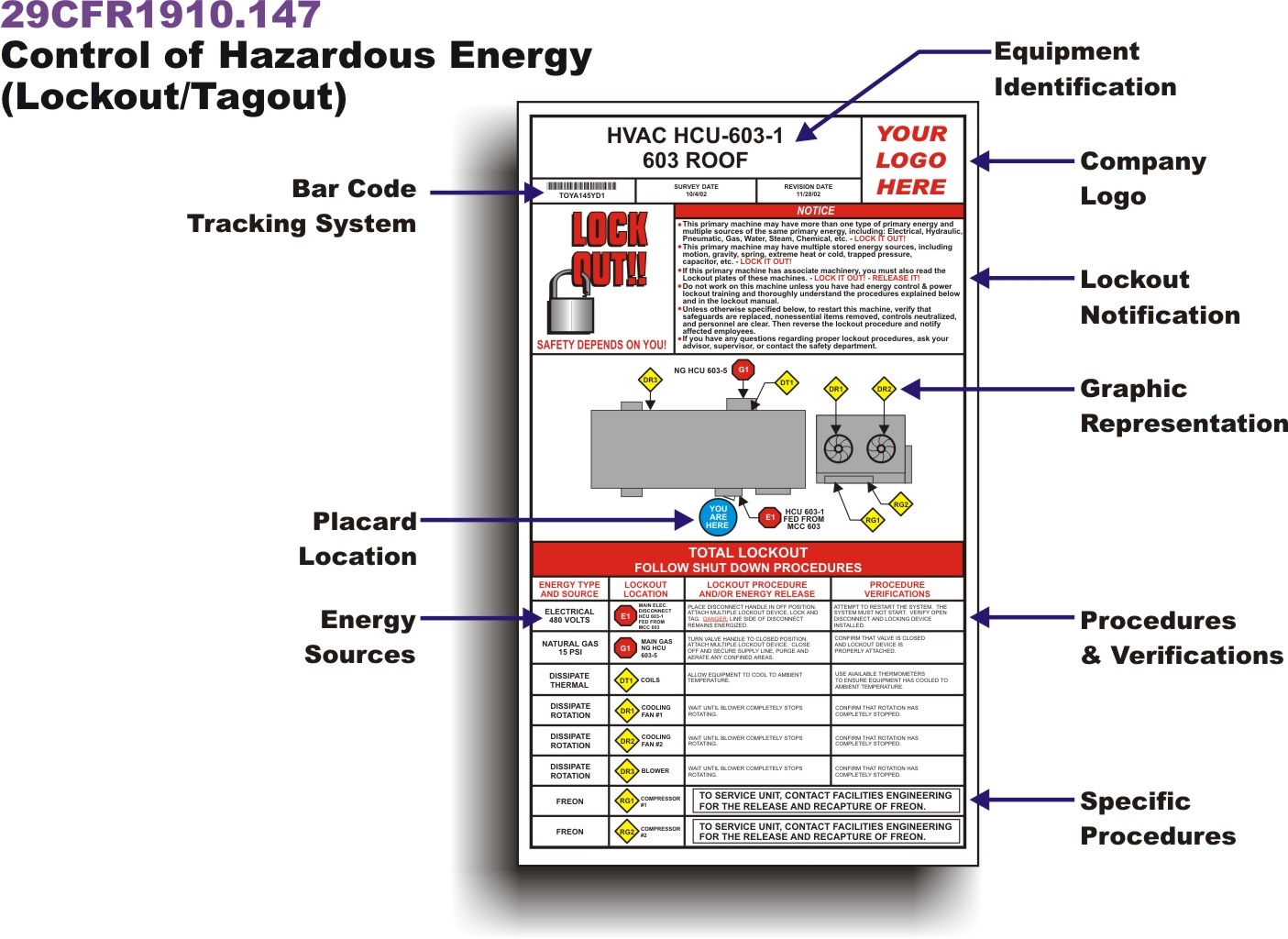
OSHA’s standard 29 CFR 1910.147 sets the baseline for LOTO in general industry, requiring written procedures, employee training, periodic inspections, and documented energy control programs.
The 6-Step LOTO Process: A Real-World Framework
A strong LOTO program follows a clear, repeatable sequence. Here’s how it works in practice—not theory.
Step 1: Preparation
Before any shutdown, the authorized employee must know exactly what energy sources are involved. This isn't guesswork. It requires reviewing equipment-specific LOTO procedures that detail every isolation point.
Example: A technician preparing to service a packaging line must identify every drive motor, control circuit, and compressed air line feeding into the system.
Common mistake: Skipping this step leads to missed isolation points—like forgetting a secondary hydraulic valve hidden beneath the machine.
Step 2: Notification
Alert all affected personnel that maintenance is about to begin. This includes operators, supervisors, and nearby workers.
Why it matters: Someone unaware might attempt to restart equipment, thinking it’s just malfunctioning.
Best practice: Use a sign-in log or digital notification system to confirm everyone is informed.
Step 3: Equipment Shutdown
Shut down the machine using normal stopping procedures. Never assume that turning off the control switch cuts all power.
Real limitation: Control circuits may de-energize, but main power could still feed capacitors or motors.
Tip: Use a standardized shutdown checklist specific to each machine.
Step 4: Isolation and Lockout
Isolate all energy sources. This means:
- Flipping disconnect switches
- Closing valves
- Blocking moving parts
- Depressurizing lines
- Draining fluids
Then, apply your lock and tag. Each worker involved places their own lock. No shared locks. No master keys.
Critical rule: One person, one lock, one key. If three technicians are working, there are three locks—each must be removed by the individual who applied it.
Step 5: Control of Stored Energy

Even after isolation, residual energy can linger. Springs under tension, elevated components, or charged capacitors can release deadly force.
Example: A mechanic servicing a crane must secure the load and ensure counterweights are mechanically blocked, not just electrically disconnected.
This step often includes:
- Bleeding pressure lines
- Grounding high-voltage circuits
- Allowing hot systems to cool
Step 6: Verification
Before touching any component, verify zero energy state.
How? Attempt to restart the machine using normal controls—while standing clear. If nothing happens, and all gauges read zero, proceed.
Never skip verification. It’s the final safety net.
Who Is Responsible? Roles in LOTO
Misunderstanding roles leads to gaps in safety. OSHA defines two key categories:
Authorized Employees These are the people who perform maintenance and apply LOTO devices. They must be trained in:
- Recognizing hazardous energy sources
- Using lockout hardware
- Following written procedures
- Clearing equipment before re-energizing
Training must be documented and refreshed annually.
Affected Employees These are operators or other workers who use or work near the equipment but don’t perform servicing. They must understand:
- What LOTO is
- Why it’s used
- Not to operate locked-out equipment
- How to recognize LOTO devices
They are not trained to apply locks, but they must respect them.
Common LOTO Failures and How to Fix Them
Even facilities with LOTO programs fail in subtle but dangerous ways.
Failure 1: Incomplete Procedures
Many written LOTO procedures list only electrical isolation, ignoring hydraulic, pneumatic, or gravity-based risks.
Fix: Conduct a full energy audit. Map every potential hazard for each machine.
Failure 2: Tag Reliance Without Locks
Some workers use tags alone—especially if locks are unavailable or inconvenient.
But tags are warnings, not barriers. OSHA allows tagout-only systems only under strict conditions (e.g., when energy isolating devices can’t accept locks), and even then, additional protective measures are required.
Fix: Invest in universal lockout kits and standardized hasps.
Failure 3: Group Lockout Confusion
In team maintenance, misunderstandings about who removed their lock can lead to premature re-energizing.
Fix: Use group lockout boxes. Each worker places their lock on the box, which holds the single master lock on the energy source. Only when all locks are removed can the box be opened and the machine restarted.
Failure 4: Improper Removal of Locks
What if a worker leaves their lock on and goes home?
OSHA permits lock removal under controlled conditions—but only after verification that the employee is not at the machine, and following a documented procedure.
Fix: Establish a formal lock removal policy, including supervisor verification, attempts to contact the employee, and written authorization.
Essential LOTO Equipment and Tools
No procedure works without the right tools. Here are five must-have components of any LOTO program:
| Item | Purpose | Real-World Use Case |
|---|---|---|
| Lockout Hasps | Allow multiple locks on one isolation point | Three technicians servicing a conveyor motor each apply their lock to the hasp on the disconnect switch |
| Valve Lockouts | Prevent accidental opening of gas, steam, or fluid lines | Used on a boiler’s main water inlet during inspection |
| Circuit Breaker Locks | Secure breakers in the OFF position | Applied during electrical panel upgrades |
| Padlocks with Unique Keys | Ensure individual accountability | Each technician has a personal lock with their name and contact info |
| Group Lockout Station | Centralized box for multi-person jobs | Used during annual shutdowns involving cross-functional teams |

Avoid generic hardware. Use color-coded locks (red for electrical, blue for pneumatic) and durable tags that resist weather and wear.
Industry-Specific LOTO Challenges
LOTO isn’t one-size-fits-all. Different environments introduce unique risks.
Manufacturing
High-speed machinery and automation increase risk. Robots can re-activate on sensor input—even during maintenance.
Solution: Isolate both main power and control logic. Use safety-rated disconnects.
Healthcare
MRI machines store powerful magnetic fields. Surgical tools use compressed gas.
Challenge: Some energy sources can’t be fully de-energized.
Solution: Use engineering controls and restricted access zones instead of relying solely on LOTO.
Construction
Mobile equipment like excavators and compressors often lack standardized isolation points.
Risk: Workers bypassing LOTO because “it’s just a quick fix.”
Solution: Establish mobile LOTO kits and enforce zero-tolerance policies.
Auditing and Continuous Improvement A LOTO program isn’t set-and-forget. OSHA requires annual inspections.
What makes an effective audit?
- Observe real maintenance tasks
- Check if procedures match actual practice
- Interview both authorized and affected employees
- Review lockout logs and incident reports
Findings should feed into updates—not just to documentation, but to training and workflow design.
Example: An audit finds that technicians often skip valve lockouts on a mixing tank. Investigation reveals the lockout point is hard to access. Fix: Relocate the valve or install an extension handle.
Building a Culture of LOTO Compliance The best procedures fail without the right culture.
Start with leadership. When supervisors bypass LOTO for production speed, the message is clear: safety is optional.
Instead:
- Recognize employees who follow LOTO rigorously
- Share near-miss stories in safety meetings
- Involve frontline workers in writing and updating procedures
- Use visual cues—floor markings, posters, QR codes linking to LOTO guides
Make LOTO part of daily language, not just annual training.
Conclusion: LOTO Is a Promise
Lockout tagout isn’t about compliance. It’s a promise—to every worker who opens a panel, climbs under a machine, or services a valve—that they will return home unharmed.
That promise starts with preparation, thrives on accountability, and depends on vigilance. It demands clear procedures, proper tools, and a culture where stopping work to do LOTO right is never questioned.
Implement it systematically. Audit it relentlessly. Live it daily.
Because the next life saved by LOTO might be someone you work with—someone you know.
FAQ
What is the difference between lockout and tagout? Lockout uses physical locks to prevent equipment activation, while tagout uses warning tags. Lockout is more secure; tagout is allowed only when locks aren’t feasible, with added safety measures.
Who can remove a lockout device? Only the authorized employee who applied the lock may remove it, unless a formal removal procedure is followed under OSHA guidelines.
Do all machines require LOTO? Not all. Equipment with a single energy source that’s under full control of the operator (like a cord-plugged device) may qualify for the “minor servicing” exception—but only during routine tasks.
How often should LOTO procedures be reviewed? Annually, through a documented inspection involving both a supervisor and an authorized employee.
Can multiple people use the same lock? No. Each worker must apply their own lock. Shared locks defeat the purpose of personal accountability.
What happens if someone forgets their lock? The lock can be removed under a strict procedure: supervisor verification, confirmation the worker is not at risk, and documented authorization.
Are electronic locks acceptable for LOTO? Not typically. OSHA requires a physical lock that provides a positive, secure hold. Electronic systems may supplement but not replace mechanical locks.
FAQ
What should you look for in Lockout Tagout Procedures That Prevent Workplace Injuries? Focus on relevance, practical value, and how well the solution matches real user intent.
Is Lockout Tagout Procedures That Prevent Workplace Injuries suitable for beginners? That depends on the workflow, but a clear step-by-step approach usually makes it easier to start.
How do you compare options around Lockout Tagout Procedures That Prevent Workplace Injuries? Compare features, trust signals, limitations, pricing, and ease of implementation.
What mistakes should you avoid? Avoid generic choices, weak validation, and decisions based only on marketing claims.
What is the next best step? Shortlist the most relevant options, validate them quickly, and refine from real-world results.