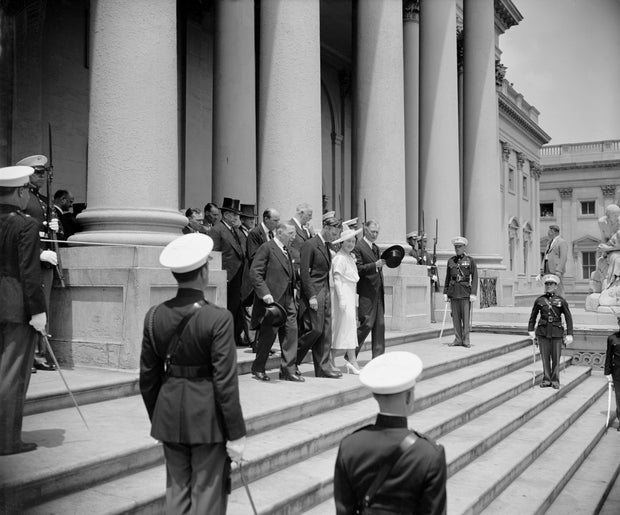
Few events blend pageantry, politics, and public fascination like a British royal state visit to the United States. These are not just diplomatic formalities—they are cultural milestones, captured in photographs that echo across decades. As King Charles III arrives on American soil for his first state visit since ascending the throne, the spotlight turns not only to the present moment but also to the rich visual archive of royal predecessors who walked these same corridors of power.
Photographs of British royals in the U.S. do more than document history—they shape perception. They reveal how monarchy adapts, endures, and sometimes stumbles in the glare of democratic scrutiny. From war-torn goodwill tours to glittering White House dinners, the imagery tells a story of alliance, evolution, and enduring symbolism.
This is not merely nostalgia. These moments inform how both nations view their special relationship—soft power made visible through carefully composed frames, unguarded smiles, and historic handshakes.
The First Royal Footprint: Edward VIII Before the Abdication Before Charles, before Elizabeth, there was Edward—whose brief but pivotal American chapter unfolded not as king, but as Prince of Wales.
In 1924, the future Edward VIII toured North America, and his U.S. leg left a trail of striking images: hat in hand, smiling beside Ford assembly lines, shaking hands with factory workers in Detroit. These weren’t the stiff portraits of imperial authority; they were modern, approachable, even populist.
Photographers captured him leaning into crowds, removing his gloves to touch ordinary citizens—an early playbook for media-savvy monarchy. One iconic image shows him at Mount Vernon, standing solemnly at George Washington’s tomb. The symbolism was clear: a British prince paying homage to American independence.
But Edward’s connection to the U.S. would later become scandalous. His abdication in 1936 was triggered by his determination to marry Wallis Simpson, an American divorcée. The press erupted. Photos of the couple in Paris, Cannes, and later in exile, turned royal romance into transatlantic tabloid fodder.
Edward’s legacy in American visual memory is dual: a trailblazing royal modernizer and a cautionary tale of personal desire over duty.
Elizabeth II: The Queen Who Defined the Modern Royal Visit
No monarch visited the United States more frequently or left a more indelible photographic record than Queen Elizabeth II.
Her first trip, in 1957, was a carefully choreographed Cold War gesture. Arriving at Washington National Airport in a pillbox hat and pale coat, she was greeted by President Eisenhower. Photos from that visit show her riding in an open-top car through Pennsylvania Avenue, smiling despite the October chill.
But it was her 1976 bicentennial tour that produced some of the most enduring images. Dressed in a white and red ensemble, she stood beside President Ford on the deck of the HMS Endeavour replica, waving to crowds along the Potomac. Another famous shot: her sipping a Coke at the Atlanta World’s Fair, a subtle nod to American consumer culture.
:max_bytes(150000):strip_icc():focal(728x275:730x277)/princess-catherine-prince-william-donald-trump-king-charles-iii-trump-state-visit-uk-windsor-091725-8672599a27214b6f8ffdbb07fd7596e4.jpg)
The Queen’s 2007 visit, marking the 400th anniversary of Jamestown, included a lighter moment—laughing with President George W. Bush during a horse inspection at Mount Vernon. The photo went viral before “viral” was a standard metric, humanizing both leaders.
Elizabeth’s ability to blend formality with warmth—captured in thousands of photos—cemented her as the face of Anglo-American unity across six decades.
A Pattern in the Pictures: What the Images Reveal
Reviewing these photos over time, patterns emerge:
- Attire as diplomacy: Bright coats and hats weren’t just style—they ensured visibility in crowds and on film.
- Shared laughter: Moments of levity, like the Coke sip or the horse inspection, were carefully staged but genuinely disarming.
- Historic backdrops: Mount Vernon, the Statue of Liberty, Independence Hall—locations were chosen to underscore shared values.
- Press choreography: Every wave, handshake, and glance was timed, yet the best images feel spontaneous.
These weren’t accidents. They were engineered authenticity—crafted by royal staff and U.S. hosts to project stability, friendship, and continuity.
Prince Charles: From Controversial Heir to King in Waiting
Long before he wore the crown, Charles made headlines—and generated photos—on American soil.
His 1981 tour, just before marrying Lady Diana, included a visit to New York. One image shows him touring the South Bronx, then a symbol of urban decay. His suit and tie contrasted sharply with the burned-out buildings behind him. Critics questioned the optics, but the photo also showed a prince engaging with real issues.
Later visits took on a different tone. In 2005, he toured sustainable building projects in Portland, reflecting his environmental advocacy. Photos depicted him examining solar panels and discussing green architecture—niches away from the usual royal glamour, but aligned with his personal mission.
These images laid the groundwork for how Charles would be seen: not just a ceremonial figure, but one with convictions, sometimes out of step with tradition.
The Charles III State Visit: A New Era in Frame
Now, as King Charles III steps onto U.S. soil for his first state visit, the photographic narrative enters a new chapter.
The images from this trip will be scrutinized not just for their diplomacy, but for their symbolism. What will they say about a 75-year-old king in a world that increasingly questions inherited power?
Early photos from the arrival—disembarking from Britannia (or its modern equivalent), inspecting the honor guard, the motorcade through D.C.—will echo past visits. But subtle details will speak volumes: his choice of suit, Camilla’s presence as Queen Consort, their interactions with President Biden and First Lady Jill Biden.
A state dinner at the White House will produce the evening’s most circulated image: perhaps Charles toasting beneath the Resolute Desk backdrop, or sharing a quiet word with the president about climate or global health—his signature causes.
Unlike past visits, this moment unfolds under a different media lens. Social media will fracture the narrative. A single unguarded expression, a wardrobe choice, or a perceived snub could trend before the next formal event.
Yet the official photos—the curated stills released by Buckingham Palace and the White House—will aim for continuity: a monarch honoring tradition while quietly reshaping it.

The Power of the Frame: Why Royal Photos Still Matter
In an age of deepfakes and filter culture, why do we still care about formal royal photographs?
Because they serve as civic anchors. They mark time. They signal alliance. A photo of a British monarch with a U.S. president isn’t just a memory—it’s a statement of enduring partnership.
Consider the 2011 visit when Queen Elizabeth hosted President Obama at Windsor Castle. A widely shared image showed the Queen and Michelle Obama laughing on the castle steps, arms linked. It became a symbol of warmth between nations—and of two powerful women navigating public roles.
Similarly, when Prince William visited New Orleans in 2014 to honor British volunteers in post-Katrina recovery, photos of him helping rebuild homes carried real weight. They weren’t just PR—they reinforced a narrative of shared responsibility.
These images outlive their moment. They appear in textbooks, documentaries, and museum exhibits. They become part of how both countries remember their relationship.
What Sets Charles III’s Visit Apart
There are clear differences between past visits and this one:
- Age of the monarch: Charles is the oldest person ever to assume the British throne. Photos will reflect a more restrained energy—less walking through crowds, more seated engagements.
- Media environment: Unlike Elizabeth’s era, every moment is live-streamed, screenshot, and memed. The royal team must anticipate viral fragments, not just front-page spreads.
- Public skepticism: Support for the monarchy has waned, especially among younger Americans. The images must work harder to convey relevance.
- Camilla’s role: As Queen Consort, her presence is historic. Photos positioning her alongside Jill Biden or addressing events will signal her acceptance.
Charles also brings a different agenda. Expect visuals centered on climate action, youth opportunity, and conservation—less imperial legacy, more global stewardship.
The Unseen Work Behind the Photos
What viewers rarely see is the months of planning behind a single state visit photo.
Security sweeps, dress rehearsals, lighting tests, and protocol negotiations shape what ends up in frame. The “spontaneous” wave? Practiced. The casual stroll? Timed to the second.
Royal staff coordinate with the U.S. Secret Service, the State Department, and the White House Communications Agency. Even the angle of a flag matters.
And then there’s the editing process. Dozens of images are taken. Only a few are released—each vetted for tone, clarity, and message.
For Charles III’s visit, expect a tight visual strategy: dignity, partnership, and quiet purpose.
Closing: The Image That Will Define This Visit
In the weeks ahead, one photo will likely dominate: King Charles III and President Biden standing side by side, perhaps at Arlington Cemetery, or during a joint address.
That image will be studied, shared, and archived. It will represent not just a moment, but a transition—from Elizabeth’s long reign to Charles’s uncertain legacy.
Will it show warmth? Distance? Shared resolve?
As history has shown, it won’t just reflect the relationship between two leaders. It will shape how future generations understand this era of the Anglo-American alliance.
Watch the frames. They speak louder than speeches.
FAQ
Why are royal state visits to the U.S. so heavily photographed? They symbolize the special relationship between the UK and U.S., blending diplomacy with public spectacle. Photos amplify their impact globally.
How many times did Queen Elizabeth II visit the United States? She made 26 official trips to the U.S. during her 70-year reign, including state visits, private tours, and UN appearances.
Did Prince Charles visit the U.S. before becoming king? Yes, Charles visited the U.S. over 20 times as Prince of Wales, promoting environmental causes, cultural ties, and philanthropy.
What is the purpose of a state visit? State visits reinforce diplomatic bonds, allow leaders to discuss policy, and strengthen public goodwill through ceremonial events.
Who plans the events and photos during a royal state visit? A joint team from the Royal Household, the UK Foreign Office, the U.S. State Department, and the White House coordinates all logistics and media output.
Are royal visit photos staged? Most official photos are carefully choreographed for symbolism and security, though some candid moments occur naturally.
How does King Charles III’s visit differ from past royal tours? It emphasizes modern issues like climate change and sustainability, features Queen Camilla more prominently, and operates in a more volatile media environment.
FAQ
What should you look for in Royal Moments: British Monarchs in America Through History? Focus on relevance, practical value, and how well the solution matches real user intent.
Is Royal Moments: British Monarchs in America Through History suitable for beginners? That depends on the workflow, but a clear step-by-step approach usually makes it easier to start.
How do you compare options around Royal Moments: British Monarchs in America Through History? Compare features, trust signals, limitations, pricing, and ease of implementation.
What mistakes should you avoid? Avoid generic choices, weak validation, and decisions based only on marketing claims.
What is the next best step? Shortlist the most relevant options, validate them quickly, and refine from real-world results.